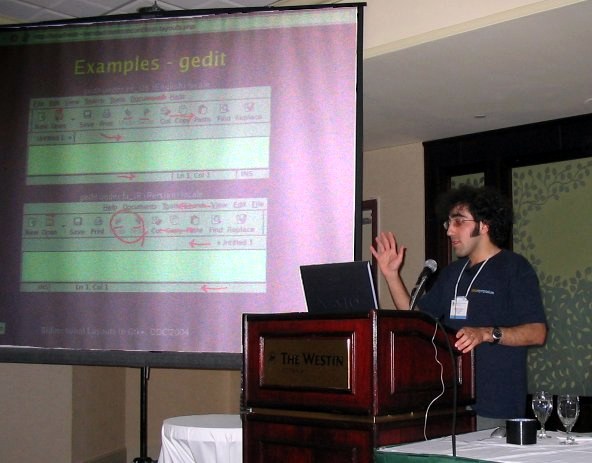
 I believe the key messages from this weeks readings were that it can be difficult to deliver a presentation and hold the audiences attention, that being arrogant, boring or confusing are the three sins of presenting, that presentations must have a beginning, middle and end, presentations can be made interesting and shouldn’t rely on power point and that you must be informed about your audience, your location and your role in a presentation. Other messages were that it’s okay to bring your personality out in your presentation, that groups must support each other and be rehearsed and organised and that levels of concentration increase and decrease at certain times.
The key points in the readings could be applied to my groups work in that they were relevant to our assignment and often related directly to group work. Wyeth’s reading made me re-consider whether our group should even utilise power point slides. He made some very good points about how to relate the information to the audience so it isn’t boring, and that slides can damage your speech, making it mechanical and predictable. This reading also outlined how to structure a presentation (Tell Em3). Drew stressed the need for a team to work together, rehearse and be prepared. She talked of allocating tasks and I am now more aware of the importance for those group members not speaking to remain focused on the speaker. Van Emden and Becker helped me see the importance of the group being harmonious and that it’s inadequate to simply divide the presentation into equal time portions. I also think it’s a good idea that a confident speaker should begin and finish the presentation and we should all introduce ourselves. We must also be careful not to interrupt each other, or loose focus after our part of the presentation is finished. The readings also emphasised the importance of utilising the beginning and end of the presentation to their full potential, because these are the highest times of audience concentration.
The readings made me think more about PR theory and practice in that many of the group theories can be applied to the workplace. There was discussion of dress codes and the importance of studying a room’s layout before presenting it in, which were more relevant to professional practice. They also emphasised that group work will continue in the work place and that employees value team work skills, so I can see the importance of this assignment. I have also learnt that being boring, confusing and arrogant are the three sins of presenting and that I shouldn’t try to play it so straight that I hide my personality. Having said that, showing too much personality can result in a negative outcome. I have also just learnt basic tips about researching, structuring and giving a presentation, which I think I will always utilise. I particularly loved a few of the analogies too and I think I will remember them always. I.e. “Speaking to an audience is like feeding apple sauce to a one year old, some of the food gets in the child, but most of it feeds the carpet.”
 The readings related to the other reading I've done in previous weeks in that like the readings on group work they were very practical, simple to understand, and could be easily applied to my own work. They both provided many useful tips and alternative ways to deal with group tasks, which I found very useful. They also related to the PBL reading, in that group work is often used to solve problems by utilising the different specialities of members. These differences can also be used to improve a presentation.

4 comments:
Wow Rachel this is an impressive blog. I especially like the pictures you have included. The only criticism I have (constructive I might add) is that you seem to be going outside the word limit. But other than that, you cover the relevant points in each reading very thoroughly. I think your group will have an excellent project with you on their team.
Gemma der Kinderen
Firstly, great blogging Rachel!!
In relation to this week's reading, I think it is quite confusing about what Wyeth said about powerpoint slide shows.
However, on that note I still think they are effective in a presentation and should still be used as they can let the audience know where you are up to and the key point you are addressing at a certain time.
I think the mistake many people make is writing out exactly what they are saying word for word on the slide - this doesn't only make it hard for the audience to read but makes the presentation boring..
So use key specific points in a slide show, keep writing large and break up the presentation with pictures, graphs etc to keep audience interest.
Hope this is helpful!
Rachel
Nice work with your blog as a whole; all of your entries are very detailed and well written.
I also liked the reading on presenting. It raised some good points and some good tips about presenting and using power point.
I think it will be helpful in our group's preparations for our own presentation!
Maggie
Stunning effort Rachel.
Mel
Post a Comment